



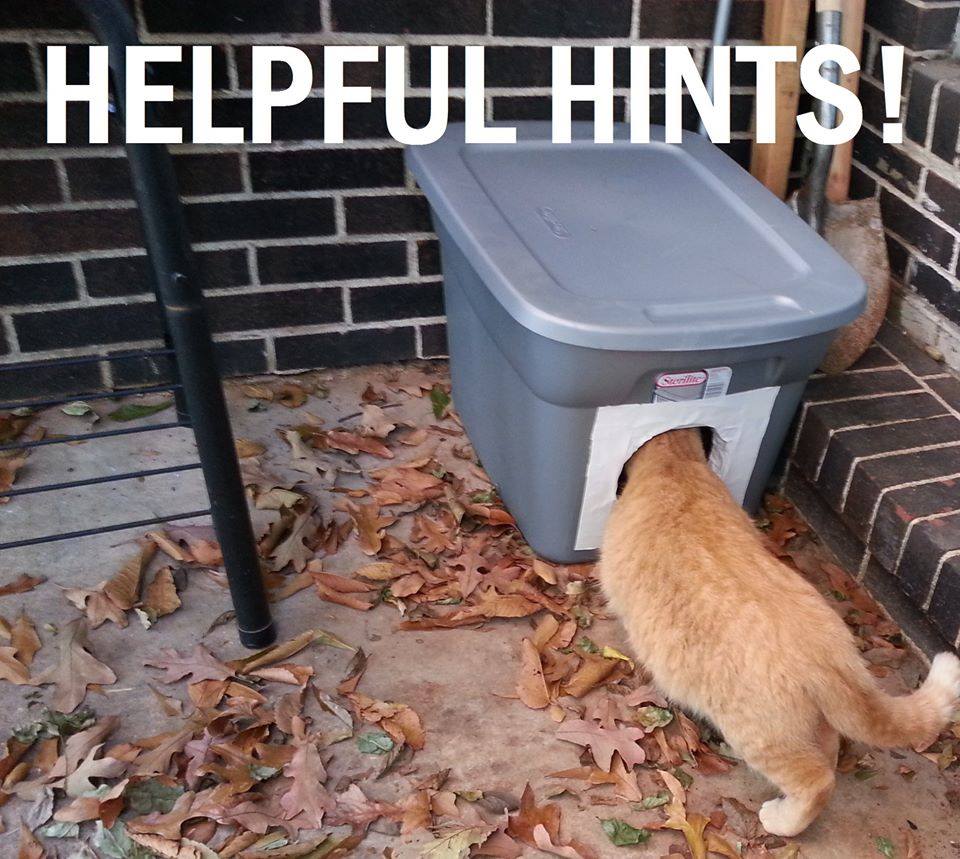
Here are some simple (but important!) tips for how to maintain your cat shelter (ie where to place it, how to entice cats into it, how to improve the environment around the shelter to keep the cats etc)
NOTE: click here for a pdf version you can print out.
SHELTER HINTS/TIPS
ENTICEMENTS: entice the cat into the shelter by sprinkling a little catnip, silver vine, or treats just OUTSIDE the shelter (FOOTNOTE: Raccoons love catnip so best not to put catnip IN the shelter)
PUBLIC/PRIVATE PROPERTY: Make sure you have permission from the city/township before placing shelters on public property; or permission from the owner if placing them on private property. They are in their legal right to remove the shelter.
PROTECT FROM WIND:
a. Place the entrance away from the wind. In the GTA, this generally means that the entrance to the shelter should face east.
b. Place multiple shelters facing each other in a square in order to cut down the wind; if you do this you can also place a sheet of plywood on top the shelters, with a couple of bricks to hold the plywood down (this will also help keep the elements from entering the shelters)
RAISE THE SHELTER (if possible) to keep the bottom from the rain and snow. For instance, use a wooden pallet, cement blocks, bricks, or lumber.
PLACE A BRICK/SOMETHING HEAVY on top of the shelter if you are concerned of high winds blowing the shelter over.
STABILITY: Make sure the foundation on which you place the shelter is flat and the shelter remains stable (not wobbly).
CLEAN, DRY STRAW inside the shelter acts as an insulator – helping to retain the body heat of the cat. Fill ¾’s of the shelter with straw and the cat will burrow in and create a warm nest for itself. Check the straw from time to time. It only needs to be changed if you are worried about flea infestation or if a critter has defecated/urinated in it. Make sure that you use straw – not hay. Hay holds moisture. Straw is yellow and dries quickly.
MAKE A TENT (if possible) to cover the shelter. This will help keep it dry and offer additional protection from the wind and cold. Put a weight on top of the lid to help form a peak for the tent. Cut wooden tent pegs if you have grommets on your tent. Old shower curtains serve well as a tent.
EVERGREEN BRANCHES: can be used to weigh down your shelter and to help it blend in with natural surroundings. They can also help protect the shelter from winter winds. Once they are covered in winter snow, they add greatly to the insulation of the shelter and the warmth for the cat.
BANK SNOW around the sides and top of a shelter to provide extra insulation and to hold the shelter in position in fierce winter winds.
NO FOOD/WATER in the shelter. It can dampen and soil the straw.
Last updated November 2019

 toronto street cats